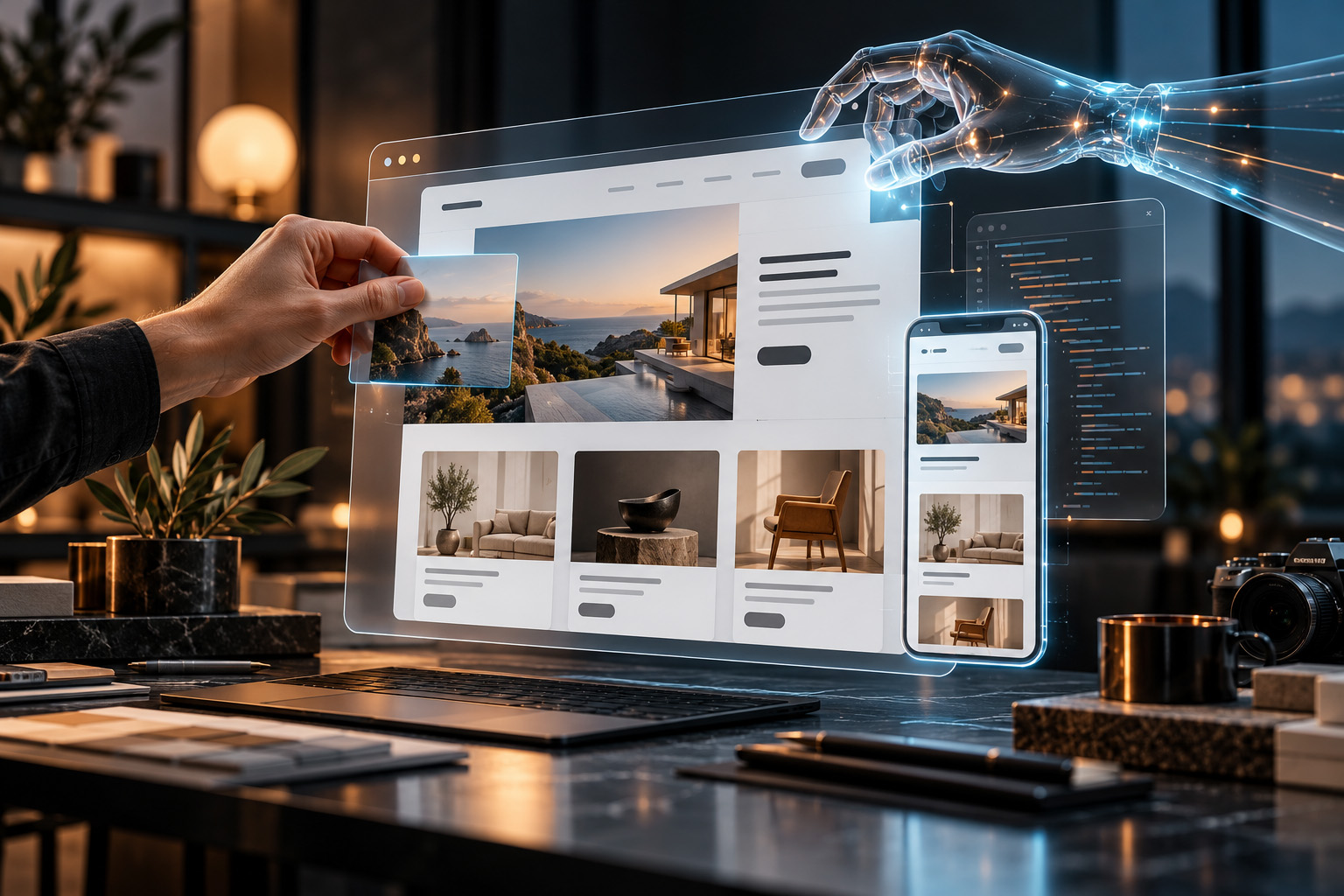
# AI Can Build a Website. Who Makes It Stand Out? **You write a few sentences, and an initial website appears. Headlines, images, buttons—even code—are ready to review. When the process looks this easy, what actually makes a website successful?** Artificial intelligence brings new speed to web development. It helps teams visualise ideas, explore design directions, draft content and write code. Using these capabilities effectively requires a clear understanding of what the website needs to achieve. ### From an idea to a first prototype At the beginning of a project, clients often have a feeling rather than a detailed brief: “It should look modern, feel different and be easy to use.” AI can help translate these broad expectations into early examples. Teams can explore page structures, colour directions and content options, making ideas visible sooner. This gives the client and the team something concrete to discuss. ### More design options, more decisions to make Generating alternatives quickly allows designers to explore a wider range of possibilities. Choosing the right direction still takes judgment. A bridal brand’s website, for example, may benefit from elegant photography and an emotional presentation. A logistics company may need clear service information, evidence of reliability and a straightforward enquiry process. Those priorities depend on the brand and its audience. ### A capable coding assistant AI can help produce repetitive code, investigate errors and build early versions of features. This can free developers to spend more time on complex problems. A button that appears on a screen, however, is only one part of a functioning order system. Data delivery, access permissions, mobile behaviour and security require separate checks. The team delivering the project remains responsible for its quality, regardless of which tools helped create the code. ### Content and multilingual websites AI can provide useful starting points for product descriptions, service pages, headlines and translations. For websites operating in Azerbaijani, Russian and English, this can make the initial content work easier. Final editing remains essential. The wording should reflect the brand, sound natural and communicate accurate information. A confidently written error is still an error. ### When is a website actually ready? A website moves closer to its purpose when visitors can find a product, understand a service and make contact easily. That requires testing practical journeys: placing an order on a phone, completing a form, switching languages and navigating the menu. AI can assist with this work too. Deciding which problems matter most to the business requires careful evaluation. ### The web professional’s evolving role Working effectively with AI involves more than writing a good prompt. It includes understanding the output, recognising weaknesses and knowing how to improve it. Strong results emerge when technology, creativity and experience work together. AI can accelerate production; a person who understands the project’s purpose gives that work direction. **Creating a website faster is increasingly possible. Making it valuable to a brand still requires thought, taste and responsibility.**